How Mountain Gorillas Recognise Individual Family Members: 7 Fascinating Ways
Understanding how Mountain Gorillas Recognise Family Members reveals the remarkable social intelligence of these endangered great apes. Mountain gorillas live in relatively stable social groups where mothers, infants, juveniles, adult females and silverbacks interact repeatedly over many years. Within these groups, individuals develop familiar relationships that influence their behaviour, communication, movement and daily activities.
The fascinating question of how Mountain Gorillas Recognise Family Members is especially relevant in Uganda’s Bwindi Impenetrable National Park and Mgahinga Gorilla National Park. Dense vegetation sometimes limits visibility, making it important for gorillas to maintain social contact through various forms of communication. Visual information, distinctive vocalisations, previous interactions and close relationships may all contribute to identifying familiar individuals.
Scientists have documented individually distinctive mountain gorilla calls and enduring social relationships, although not every possible recognition mechanism has been tested directly. Visitors enjoying gorilla trekking in Bwindi can occasionally observe the family interactions that make mountain gorilla society so fascinating.
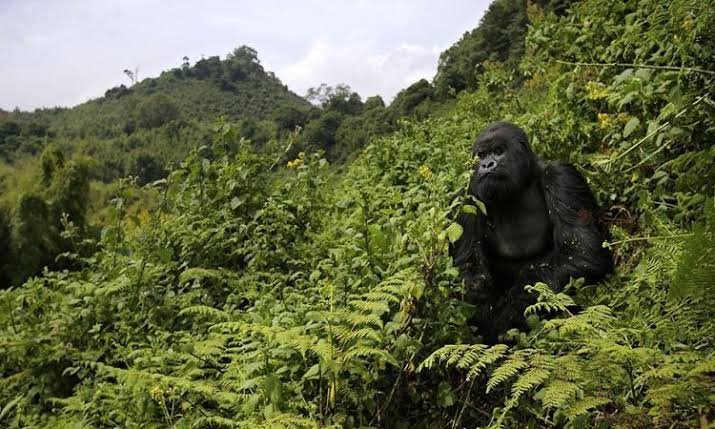

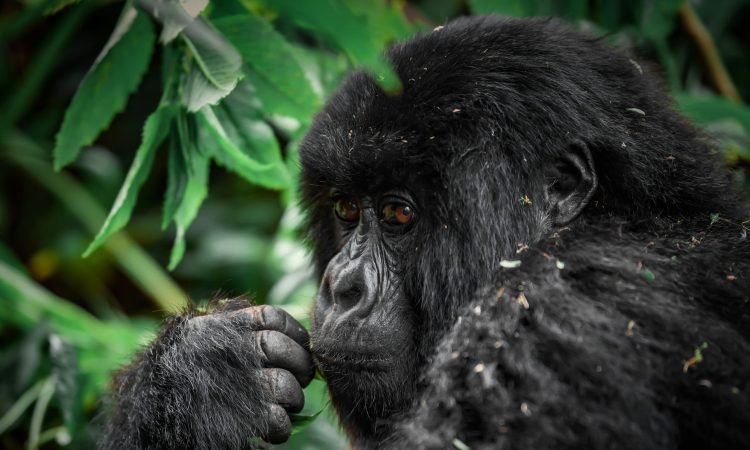
1. Mountain Gorillas Recognise Family Members Through Long-Term Familiarity
One important explanation for how Mountain Gorillas Recognise Family Members is long-term familiarity. Gorilla families spend considerable time together, feeding, resting, travelling and interacting within the same social group. These repeated encounters create opportunities for individuals to learn about the appearance, behaviour and typical interactions of their companions.
Mountain gorilla families can remain together for many years, although membership may change through births, deaths and transfers between groups. During these periods, individuals establish relationships that influence whom they approach, avoid or remain close to during ordinary activities.
Research on mountain gorillas demonstrates that some social relationships persist over substantial periods. Such findings are consistent with the importance of recognising familiar companions, although they do not independently establish precisely which sensory cues gorillas use in every encounter.
2. How Mountain Gorillas Use Visual Characteristics to Identify Individuals
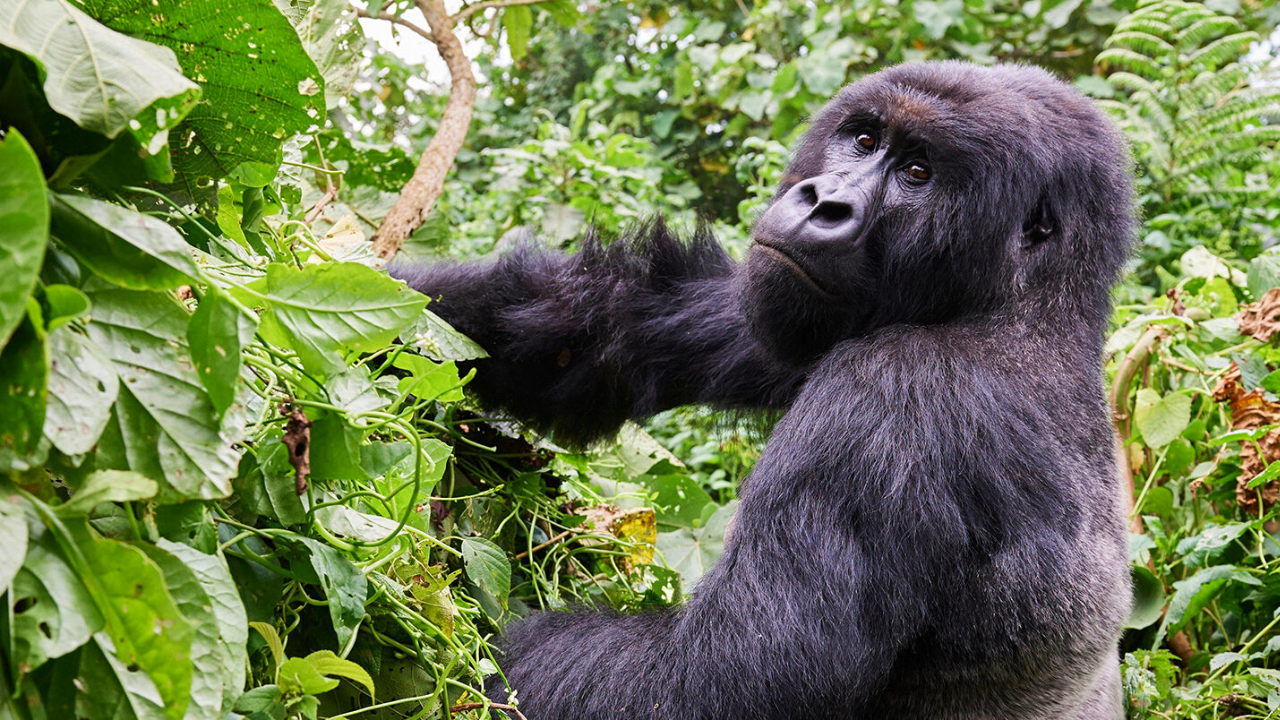
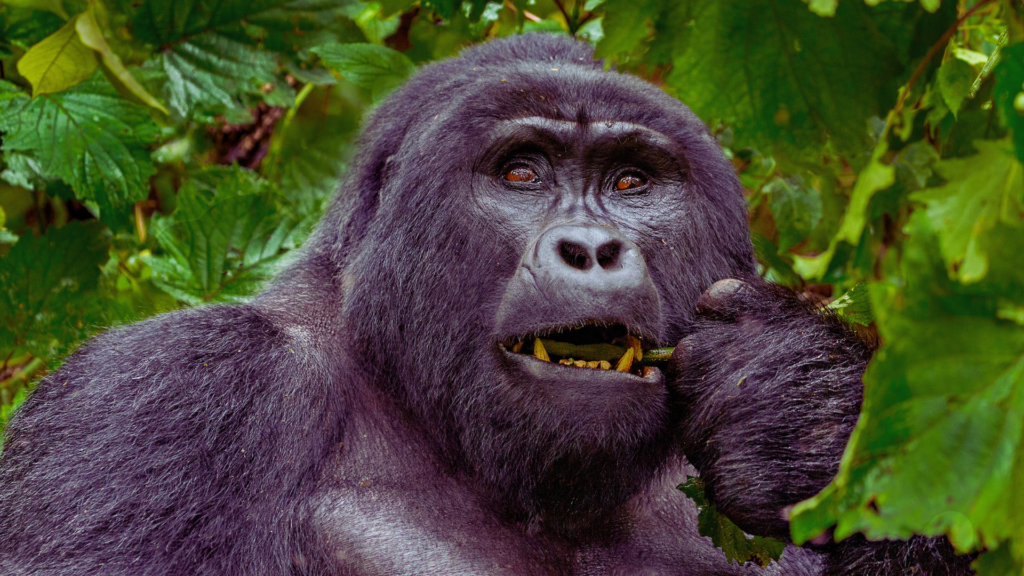
Visual information is another likely component of how Mountain Gorillas Recognise Family Members. Individual gorillas differ in facial features, body size, age, posture and other physical characteristics. Mature silverbacks also possess distinctive body proportions and silver-grey hair across their backs, making them visually different from younger males and females.
Studies involving captive great apes, including a western lowland gorilla, have demonstrated abilities to distinguish photographs of familiar individuals using physical features. However, these results should not be presented as direct experimental proof of facial recognition among wild mountain gorillas in Uganda.
Nevertheless, visual familiarity provides a plausible source of information during close social interactions. Gorillas regularly observe one another while feeding, travelling and resting, allowing them to encounter the physical characteristics of their companions repeatedly.
For visitors participating in Uganda gorilla trekking tours, differences between individual gorillas become increasingly noticeable during careful observation.
3. Mountain Gorillas Recognise Family Members Through Distinctive Vocalisations
Scientific evidence provides particularly interesting insights into vocal recognition. Mountain gorillas communicate using different sounds, including grunts, contact calls, cries and vocalisations associated with particular social circumstances.
Research on mountain gorilla double-grunts found that these calls contain individually distinctive acoustic characteristics. Gorillas produce double-grunts while feeding, resting, moving and participating in other social activities. Some calls receive vocal responses from nearby individuals.
These findings support the possibility that vocal information contributes to how Mountain Gorillas Recognise Family Members. However, demonstrating that calls differ between individuals is not exactly the same as proving that listeners consciously identify every caller.
Research involving western gorillas has also revealed individually distinctive vocalisations, strengthening the scientific basis for studying vocal identity across gorilla populations.
In Uganda’s dense rainforests, where individuals may sometimes be hidden behind vegetation, vocal communication can be especially useful for maintaining contact.
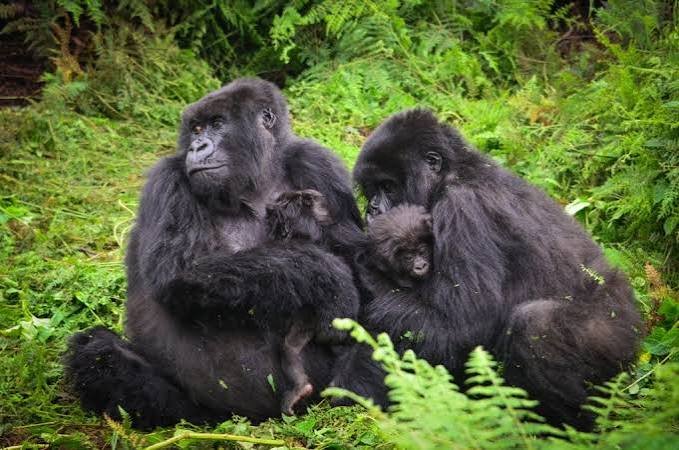
4. How Mothers and Infants Recognise Each Other
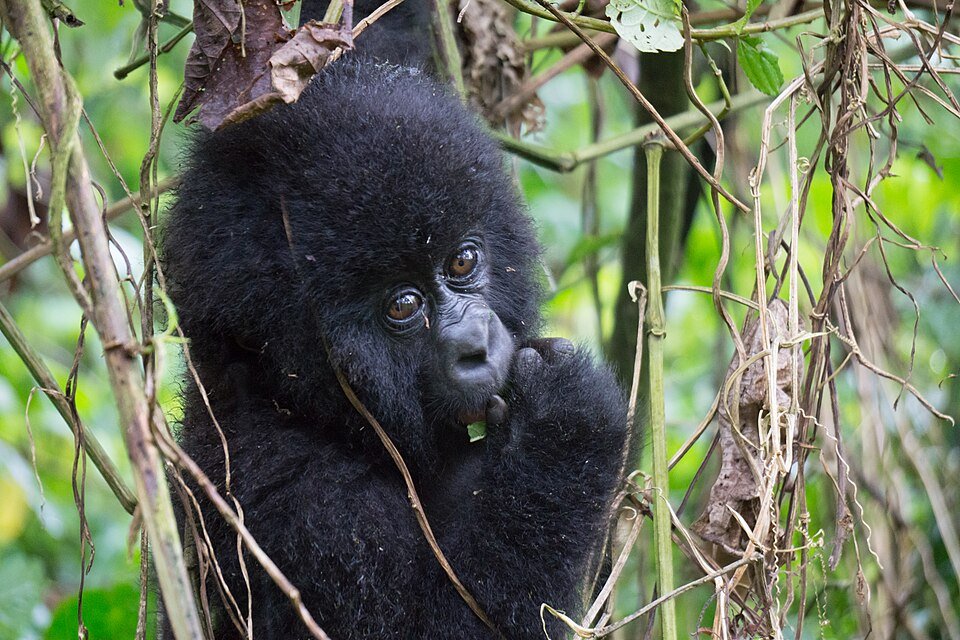
Maternal relationships are central to understanding how Mountain Gorillas Recognise Family Members. Newborn gorillas depend almost entirely on their mothers for nourishment, warmth, transportation and protection. During infancy, they maintain exceptionally close contact and gradually become more independent as they develop.
These repeated interactions create strong familiarity between mothers and offspring. Young gorillas spend considerable time observing their mothers, experiencing physical contact and responding to familiar social circumstances.
Long-term research has demonstrated that maternal relationships can remain important beyond early infancy. Mountain gorilla mothers may continue maintaining relationships with sons for extended periods, influencing social organisation and the presence of multiple males within groups.
Although scientists have not established every sensory mechanism responsible for mother-infant recognition, close contact, repeated vocal interactions and long-term experience provide opportunities for familiarity to develop.
Travellers visiting Bwindi Impenetrable National Park may observe mothers nursing infants, carrying youngsters or resting beside their offspring.
5. Could Mountain Gorillas Recognise Individuals Through Smell?
The possibility of scent recognition adds another fascinating dimension to how Mountain Gorillas Recognise Family Members. Gorillas possess a sense of smell, and research suggests that odour may carry socially relevant information among great apes.
A study involving western lowland gorillas found that their body odours could contain individually distinctive information detectable by human participants. Separate research on wild western gorillas identified changes in silverback odour intensity associated with particular social circumstances.
These discoveries suggest that scent may contribute to gorilla communication. However, they do not prove that mountain gorillas in Bwindi or Mgahinga routinely identify individual family members through smell.
The precise importance of olfactory recognition among wild mountain gorillas remains an interesting subject for future research.
Understanding this distinction is essential because scientific findings about one gorilla population cannot automatically be applied to every other population.
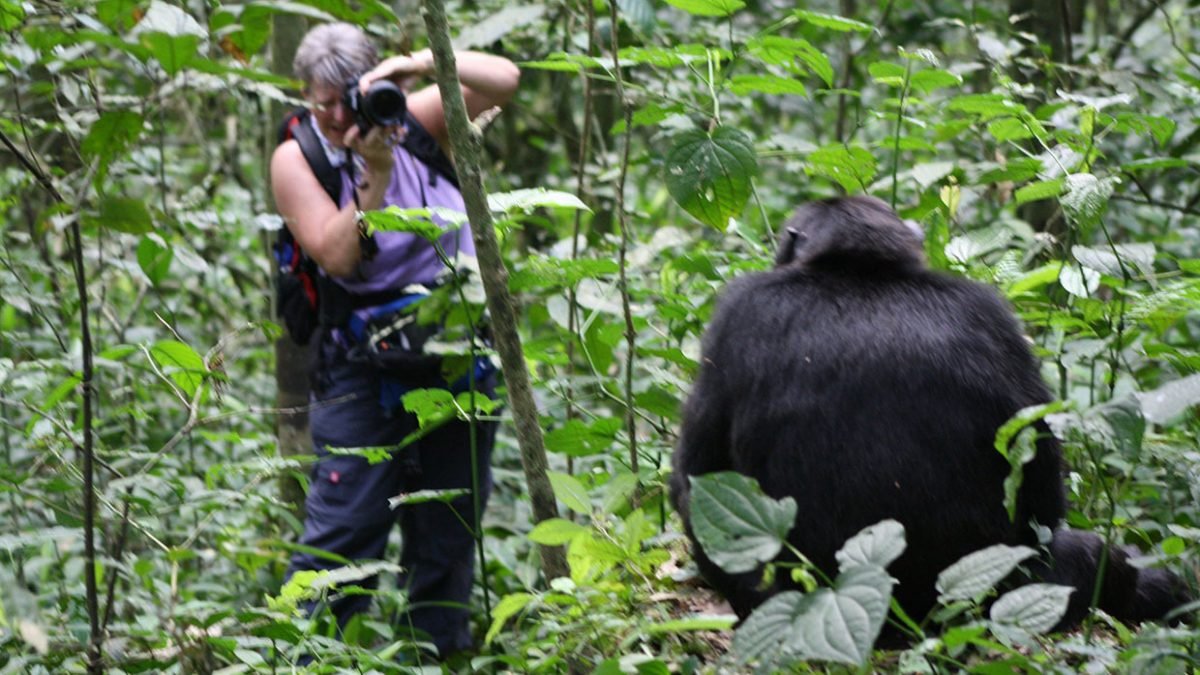
6. How Social Bonds Help Gorillas Distinguish Familiar Companions
Social relationships provide strong evidence that individual familiarity matters within mountain gorilla groups. Gorillas do not interact with every companion in exactly the same way. Some individuals spend more time together, maintain closer proximity or engage in preferred social interactions.
A 2024 study of female mountain gorillas documented enduring preferred relationships between some females, including associations that continued for several years. Maternal relatives were particularly likely to maintain close relationships.
These findings contribute to understanding how Mountain Gorillas Recognise Family Members, because consistent social preferences require individuals to distinguish particular companions from others.
The study of social bonds also reveals that mountain gorilla family relationships extend beyond mothers and infants. Adult females can maintain meaningful associations, while other group members develop relationships shaped by familiarity and previous experience.
Such interactions form part of the extraordinary social behaviour visitors may observe during the Gorilla Habituation Experience in Uganda.
7. Why Previous Experiences May Influence Individual Recognition
Previous social experience is another important consideration when examining how Mountain Gorillas Recognise Family Members. Individuals interact repeatedly throughout their lives, encountering companions during feeding, play, rest, travel and occasional disagreements.
Through these experiences, gorillas may learn which companions are familiar and how interactions with particular individuals usually unfold. Recognition can therefore involve more than noticing an animal’s physical appearance.
Studies of captive western gorillas have demonstrated that they can distinguish certain human voices according to familiarity and the nature of previous relationships. Although such research does not directly establish memory-based recognition among wild mountain gorillas, it demonstrates relevant social abilities in the genus.
Researchers must investigate recognition carefully rather than assuming that mountain gorillas remember every former companion indefinitely.
The ability to maintain familiar relationships nevertheless appears important for life within their complex social groups.
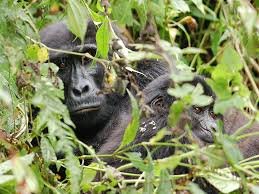
Do Mountain Gorillas Recognise Former Family Members After Separation?
Mountain gorilla family membership can change when individuals transfer between groups. Adult females may leave their original family, while some males disperse and eventually establish new social arrangements.
These changes raise interesting questions about whether gorillas can recognise former companions after lengthy separations.
Understanding how Mountain Gorillas Recognise Family Members after separation requires research that distinguishes familiarity, kinship, previous social history and the time elapsed since individuals last interacted.
Existing research demonstrates enduring relationships within mountain gorilla groups, but the duration and reliability of recognition following long separations remain incompletely understood.
It would therefore be inaccurate to promise that every gorilla can recognise every former family member after several years apart.
Why Individual Recognition Matters for Gorilla Conservation
Understanding how Mountain Gorillas Recognise Family Members helps scientists investigate social stability, maternal care, group transfers, communication and the effects of changing family composition.
Researchers studying gorilla populations must also recognise individual animals to monitor births, deaths, movements, health and long-term social relationships. Human identification of individual gorillas, however, should not be confused with the recognition abilities of the gorillas themselves.
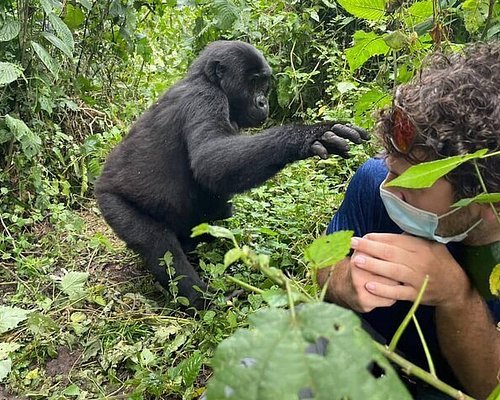
Responsible tourism supports opportunities for conservation observation while respecting natural social interactions. Visitors should never approach infants, interfere with social behaviour or attempt to provoke recognition responses.
At Mountain Gorillas Uganda, we encourage travellers to appreciate the natural relationships that make each gorilla family unique.
Frequently Asked Questions About Mountain Gorilla Family Recognition
How Do Mountain Gorillas Recognise Individual Family Members?
Mountain gorillas maintain familiarity through repeated social interactions. Visual characteristics and individually distinctive vocalisations may contribute to recognition, although not every mechanism has been demonstrated directly.
Can Mountain Gorillas Recognise Each Other’s Faces?
Visual recognition is plausible, and captive great ape research supports distinguishing familiar individuals through physical features. Direct evidence for facial recognition in wild mountain gorillas remains limited.
Do Mountain Gorillas Recognise Family Members by Voice?
Mountain gorilla double-grunts have individually distinctive acoustic characteristics, suggesting voices may provide identity information. Researchers continue investigating how listeners use these differences.
Can Baby Gorillas Recognise Their Mothers?
Young gorillas develop close relationships with their mothers through continuous contact, care and repeated interactions. The precise contribution of different sensory cues has not been fully established.
Do Silverbacks Recognise Every Gorilla in Their Family?
Silverbacks maintain repeated relationships with members of their groups, but scientists cannot confirm that every silverback identifies every individual through a particular sensory mechanism.
Can Gorillas Recognise Family Members Through Smell?
Scent may provide useful social information, as suggested by studies of western gorillas. Its importance for individual recognition in wild mountain gorillas is not yet firmly established.
Do Mountain Gorillas Remember Family Members After Years Apart?
Long-term social relationships demonstrate the importance of familiarity, but researchers have not established a universal time limit for recognition after separation.
Why Is Family Recognition Important for Mountain Gorillas?
Recognising familiar companions may support social relationships, maternal care, communication and group coordination.
Can Mountain Gorillas Recognise Human Visitors?
Captive western gorillas have demonstrated recognition of familiar human voices. This does not mean wild mountain gorillas can reliably recognise every tourist.
Where Can I Observe Mountain Gorilla Family Behaviour in Uganda?
Visitors can observe habituated gorilla families during regulated trekking in Bwindi and Mgahinga Gorilla National Park.
Experience Mountain Gorilla Family Relationships in Uganda
Watching mountain gorillas interact naturally provides an extraordinary opportunity to appreciate the complexity of their social lives. From mothers caring for infants to silverbacks resting beside familiar companions, every encounter reveals aspects of how these remarkable great apes maintain family relationships.
Understanding how Mountain Gorillas Recognise Family Members can make a safari experience even more rewarding, helping visitors appreciate subtle vocalisations, close social bonds and everyday interactions that are easy to overlook.
At Mountain Gorillas Uganda, we organise memorable Uganda gorilla trekking tours to Bwindi Impenetrable National Park and Mgahinga Gorilla National Park.
Whether you are interested in gorilla trekking in Bwindi, exploring Mgahinga’s mountain gorilla habitat or discovering the Gorilla Habituation Experience, we can help plan a rewarding adventure.
Review our Uganda gorilla trekking permit guide and choose suitable travel dates.
Request Your Personalised Uganda Gorilla Safari Quote and discover the fascinating family lives of mountain gorillas in Uganda’s protected forests.